
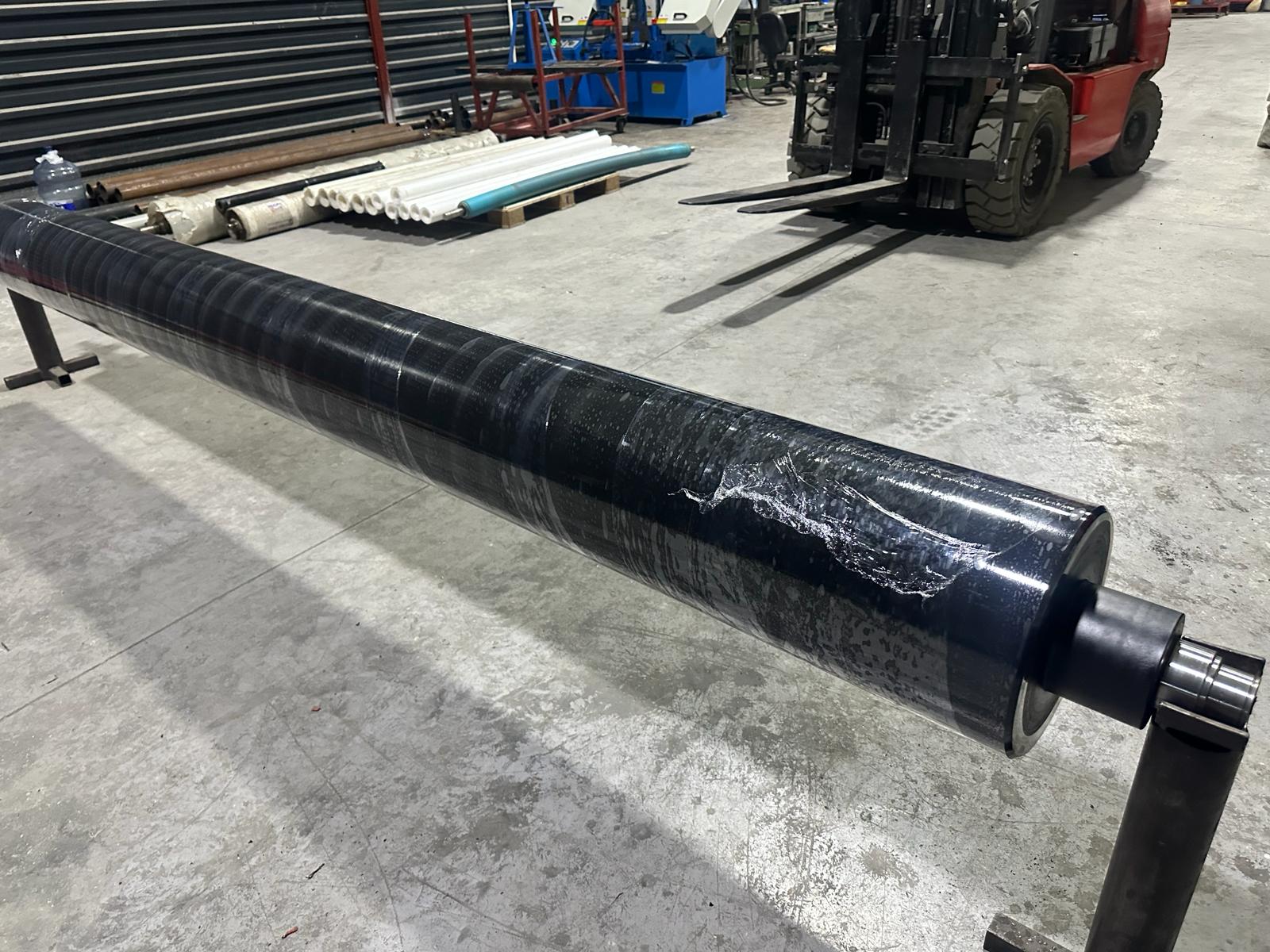
Printing and Paper Industry: Rubber-covered rollers are widely used in printing machines and paper production lines. The smoothness and flexibility of the surface improve print quality while preventing wear and tear on the rollers.
Textile Industry: Rollers used in textile machinery are covered with rubber to prevent damage to fabrics during processing. This ensures smooth handling of the fabric and improves product quality.
Metal Processing: In the metal processing industry, rubber-covered rollers provide surface protection during the handling and transportation of metals. This prevents scratching and damage to the metal surfaces.
Food and Beverage Industry: Rubber coverings compliant with food safety standards are used in food and beverage processing machinery. This helps maintain hygienic conditions and reduces the risk of contamination.
Durability: Rubber coverings exhibit high resistance to wear and tear, thus extending the service life of the rollers.
Chemical Resistance: Many types of rubber are resistant to various chemicals, making the coatings ideal for rollers that come into contact with industrial chemicals.
Flexibility: Rubber coverings provide flexibility against impacts and stresses, which reduces mechanical damage.
Heat Resistance: Special rubber materials can withstand high temperatures and can therefore be used in applications exposed to high heat.
The rubber roller covering process begins with careful surface preparation. The surface of the roller is cleaned and smoothed. Then, the appropriate rubber material is selected and applied to the roller's surface. During the coating process, special adhesives may be used to ensure the rubber adheres tightly to the roller. Finally, the coating is cured (or hardens), and the roller is polished to achieve the desired surface characteristics.